Designing the Unseen: The Craft of Theatrical Foley and Atmospheric Soundscapes
The Acoustic Architecture Behind Dramatic Tension
Psychoacoustics in live performance is the craft of shaping what an audience feels before it consciously identifies what it hears. A low vibration beneath a pause, a distant room tone that seems to widen the stage, or the dry scrape of fabric against wood can alter attention, expectation, and physical comfort without behaving like conventional musical underscoring. For production teams working at the intersection of story and technology, live foley sound demonstrates how carefully selected acoustic details can become part of the narrative machinery itself.
The most successful theatrical soundscapes are therefore not necessarily the loudest or most elaborate. They operate as invisible architecture, organizing the audience”s perception of distance, danger, intimacy, and time. That architecture must also coexist with speech. Dialogue remains the primary carrier of dramatic information, so immersion is only successful when atmosphere supports the actor rather than competing with the actor. Every low-frequency swell, surround cue, and tactile effect needs a clear dramatic purpose, a controlled level, and a reliable relationship with the room.
Sculpting the Unheard Atmosphere with Directional Ambience
Atmospheric design begins with layers that occupy different perceptual roles. A sub-bass rumble can suggest unstable ground, machinery, weather, or emotional pressure, while a thin high-frequency bed can imply wind, electrical tension, insects, distant traffic, or an environment too large to see. Neither layer needs to announce itself. In fact, the most effective beds often remain just below conscious attention until the scene changes or the sound disappears.
Low frequencies should be introduced with restraint. Excessive sub-bass can excite the building, blur consonants, and create physical fatigue, particularly in older theatres with resonant balconies or timber structures. High-frequency material requires similar discipline because constant hiss, air, or granular texture can mask fricatives and make voices feel smaller. A useful approach is to make the atmosphere evolve slowly, using automation, filtering, and carefully chosen entry points instead of relying on a continuous full-spectrum loop.
Speaker placement turns this material into a psychological map. Front arrays can establish the stage as a coherent source, while side, rear, under-balcony, or embedded loudspeakers can extend the dramatic world beyond the proscenium. An arena production of Othello, discussed by UGA Theatre, used water-related sounds to trace mental anguish and emotional turmoil. The concept illustrates a central principle: an ambient image becomes powerful when its spatial movement follows the characters” inner trajectory rather than simply illustrating location.
- Use sub-bass to imply scale, pressure, instability, or unseen movement.
- Use high-frequency beds to suggest air, distance, exposure, or nervous energy.
- Reserve directional rear and side sources for perceptual expansion, not constant spectacle.
- Build transitions around dramatic shifts, allowing silence to reveal the shape of the previous sound.
Classic tragedy benefits particularly from this indirect method. A nearly static bed can make a courtroom, palace, or battlefield feel increasingly airless as a character loses control. A faint surround texture can make an apparently empty auditorium feel occupied by memory, rumor, or threat. The audience may never identify the individual components, yet the pressure is registered through altered attention and expectation. Sound design for theatre is strongest when the atmosphere changes the meaning of stillness.
Tactile Realism through Mechanical and Performed Foley
Theatre has always used physical devices to make invisible forces tangible. Historical accounts collected by the Theatre Sound Designers and Composers Association trace a lineage from ancient effects and Elizabethan machinery to thunder runs, thunder sheets, wind machines, and later recorded playback. These techniques were not primitive substitutes for technology. They offered visible, physical relationships between action and sound, allowing an audience to understand weather, impact, movement, and scale through the energy of objects in motion.
Modern live foley extends that tradition while making the mechanism part of the event. In Gareth Fry”s work on a German-language production of Waves, performers created projected images, voices, sound effects, and abstract sonic gestures in view of the audience. The production explored the mental and shifting perspectives of Virginia Woolf”s novel, using actions such as cutlery, shaving, and a bowed fish bowl to expose the process behind the illusion. That transparency is especially valuable in intimate staging, where the audience can perceive not only the resulting sound but also the timing, resistance, and risk involved in producing it.
Close microphones make small actions dramatically legible, but they also reveal every inconsistency. A performer manipulating a coat, glass, door latch, or tray must coordinate grip, movement, microphone distance, and cue timing with the precision of a musician. Proximity effect can add desirable weight to a scrape or breath, yet a slight shift toward the capsule may produce an exaggerated bass surge. Physical foley therefore requires rehearsal at performance distance, not merely at the table. The operator must learn where an object sounds authentic, where it clips, and where the microphone hears handling noise instead of the intended gesture.
| Approach | Strength | Production risk | Best application |
|---|---|---|---|
| Digital playback | Repeatable timing and consistent tonal control | Can feel detached from the actor”s physical action | Complex transitions, large-scale environments, and precision cues |
| Physical foley | Tactile resonance, visible causality, and human variation | Requires rehearsal, maintenance, and skilled operation | Intimate scenes, exposed mechanics, and character-driven detail |
| Hybrid design | Combines reliability with live texture | Needs careful phase, level, and cue coordination | Layered impacts, live manipulation supported by designed reinforcement |
The distinction between playback and physical foley is not a contest between old and new methods. It is a decision about what the audience needs to believe. A recorded footstep may be ideal when the actor is far from the microphone or when a sequence requires exact rhythmic control. A live shoe on a resonant surface may be more convincing when the audience is watching a performer cross a narrow pool of light. The most persuasive designs often combine both, using live transients for presence and playback layers for scale, tail, or continuity.
Preserving Intelligibility within Dense Acoustic Fields
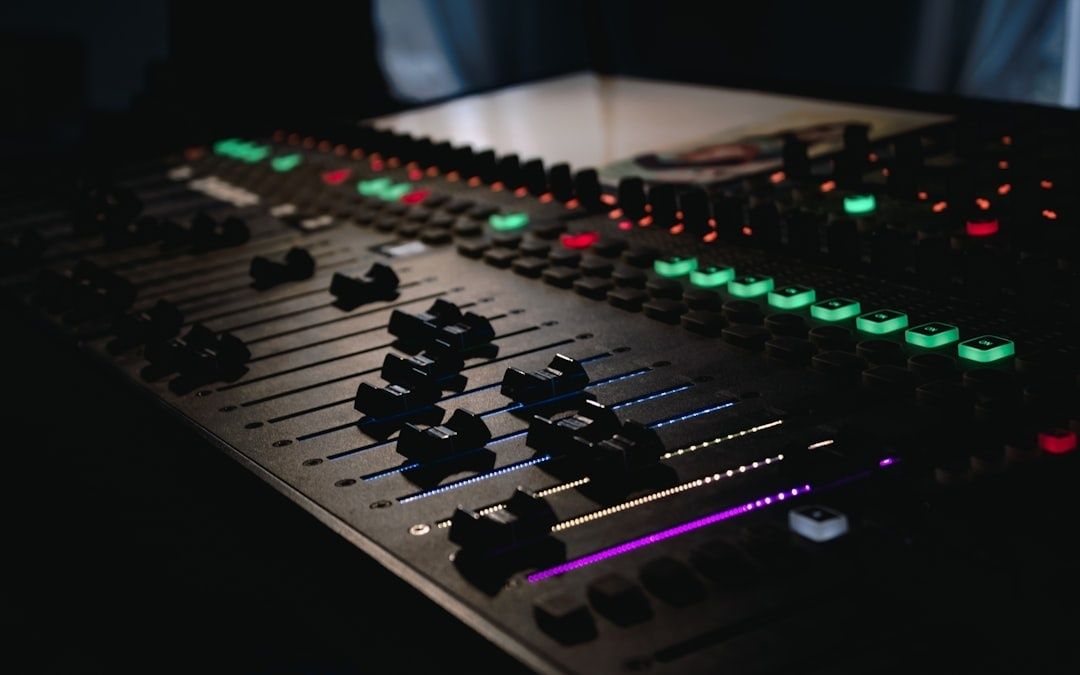
Speech intelligibility is protected through spectral space, timing, and reflection control. The critical vocal region is often treated broadly as the 1 kHz to 4 kHz range, where many consonants and articulatory cues carry meaning. Atmospheric beds that occupy this region continuously can make dialogue seem distant even when the overall level is moderate. The solution is not simply to raise the voice. Excessive vocal reinforcement can expose microphones, increase feedback risk, and make the actor sound disconnected from the stage.
Instead, shape the environment around the speech. Reduce competing midrange energy during spoken lines, use dynamic equalization or sidechain ducking where appropriate, and keep low-frequency effects from blooming into the vocal system. Early reflections can provide useful support and presence, but uncontrolled late reverberation smears consonants. The acoustic work at Powell Hall offers a useful architectural parallel: designers used calibrated modeling and three-dimensional reflection mapping to preserve warmth while improving clarity, retaining beneficial surfaces and refining problematic ones. In theatre, the equivalent is a tuned relationship between direct sound, early support, and controlled decay.
Technical teams should also distinguish masking from simple loudness. A quiet broadband texture can be more damaging to clarity than a louder sound confined to a noncritical band. Conversely, a dramatic impact may coexist with dialogue if its transient is carefully timed and its decay is shaped. The goal is to maintain an intelligible vocal center while allowing the surrounding field to remain active and cinematic.
- Map the vocal priority. Measure the room and identify where direct speech, reinforcement, and problematic reflections overlap. Establish a reference passage with representative actors rather than tuning only to pink noise.
- Build the atmosphere below the voice. Set beds at conservative levels, then adjust their equalization so the most important vocal consonants remain exposed during the densest passages.
- Tune reflections and dynamics. Control excessive reverberation, align delay sources, and use restrained compression or automation to prevent atmospheric peaks from covering critical text.
- Listen from every audience zone. Check stalls, side seating, balconies, and rear rows with the full design active. A mix that is clear at the console may be masked in a reflective corner of the auditorium.
Calibration should be treated as a performance process, not a single installation task. Microphone positions, actor projection, scenic changes, audience occupancy, and temperature can all alter the result. A room may sound controlled during an empty technical rehearsal and become more absorbent once occupied. Conversely, a hard scenic wall introduced late in the process may create a new reflection that competes with a softly spoken line. Documenting these changes gives the operator a practical basis for dynamic tuning rather than relying on instinct alone.
Spatial Panning and Psychoacoustic Localization in Live Performance
The Haas precedence effect offers a powerful way to steer attention without making a source appear artificially detached. When similar sounds arrive from multiple locations within a short time window, the audience tends to localize the event toward the earliest arrival while still experiencing increased presence from later energy. In practical terms, a carefully timed primary source can anchor a footstep, impact, or voice-like texture at one position, while delayed reinforcement broadens the event across the room. This is valuable when the dramatic space extends from the stage into the audience.
Dynamic automation can deepen that illusion by linking spatial cues to actor blocking, lighting states, or scenic transitions. A phantom source may follow a performer along a corridor, remain fixed at an unseen doorway, or move behind the audience as a character recalls an event. Systems such as spatial mixing platforms, including the technologies demonstrated through immersive theatre sound systems, allow designers to distribute this motion across multiple loudspeakers rather than forcing every event through a single front image.
- Use a clear arrival source to establish localization, then add later energy for width and environment.
- Automate movement in relation to blocking, but avoid motion so constant that it becomes visualized by the ear.
- Check phase coherence and delay alignment across stalls, side tiers, balconies, and under-balcony positions.
- Protect the acoustic center of dialogue when moving effects pass behind or beside the audience.
Phase management becomes increasingly important as seating tiers experience different arrival times. A source that feels broad and stable in the stalls may become hollow or unstable in a balcony if adjacent loudspeakers arrive out of alignment. Measurement tools can identify timing and polarity problems, but listening remains essential because localization is perceptual. Walk the room during active cues, compare spoken passages with and without spatial layers, and verify that movement supports the audience”s attention instead of pulling it away from the actor”s face.
Mastering the Invisible Hand of Theatrical Worldbuilding
Theatrical sound reaches its most persuasive form when mechanical foley, spatial ambience, and vocal reinforcement behave as one designed system. A live scrape should belong to the same acoustic world as the distant room tone. A sub-bass swell should increase pressure without making the dialogue smaller. A surround cue should extend the stage without turning the audience toward the loudspeaker. These relationships are established through concept, measurement, rehearsal, and repeated listening rather than through isolated effects selection.
During tech week, schedule listening passes with specific objectives. Run one pass for vocal clarity, another for spatial continuity, and another for the physical credibility of foley. Listen from multiple seating tiers, test scenes at performance level, and ask whether every major sonic change alters attention or meaning. Remove layers that merely demonstrate equipment. Preserve the details that sharpen the actor”s action, enlarge the dramatic world, or make silence feel charged. The invisible hand of sound is most powerful when the audience experiences its consequences without seeing the mechanism.